Fanatics

NFLShop.com - Customized NFL Gear
Showing posts with label Associated Press. Show all posts

Tuesday, November 6, 2012

The Right to Vote and an explanation of the facts behind my own voting choices:

To start today's Election Day blog post, I'm going to quote the words of a good friend from here in the Commonwealth.

"The school of thought that because you are informed and pay attention to what is happening in the country and the world around you means that everyone who comes to a different conclusion is not ludicrous (nor) counterproductive. Go out and vote your heart tomorrow and then accept the results, move on and respect winners, the will of the majority and the choices they made. We all deserve that and nothing less."
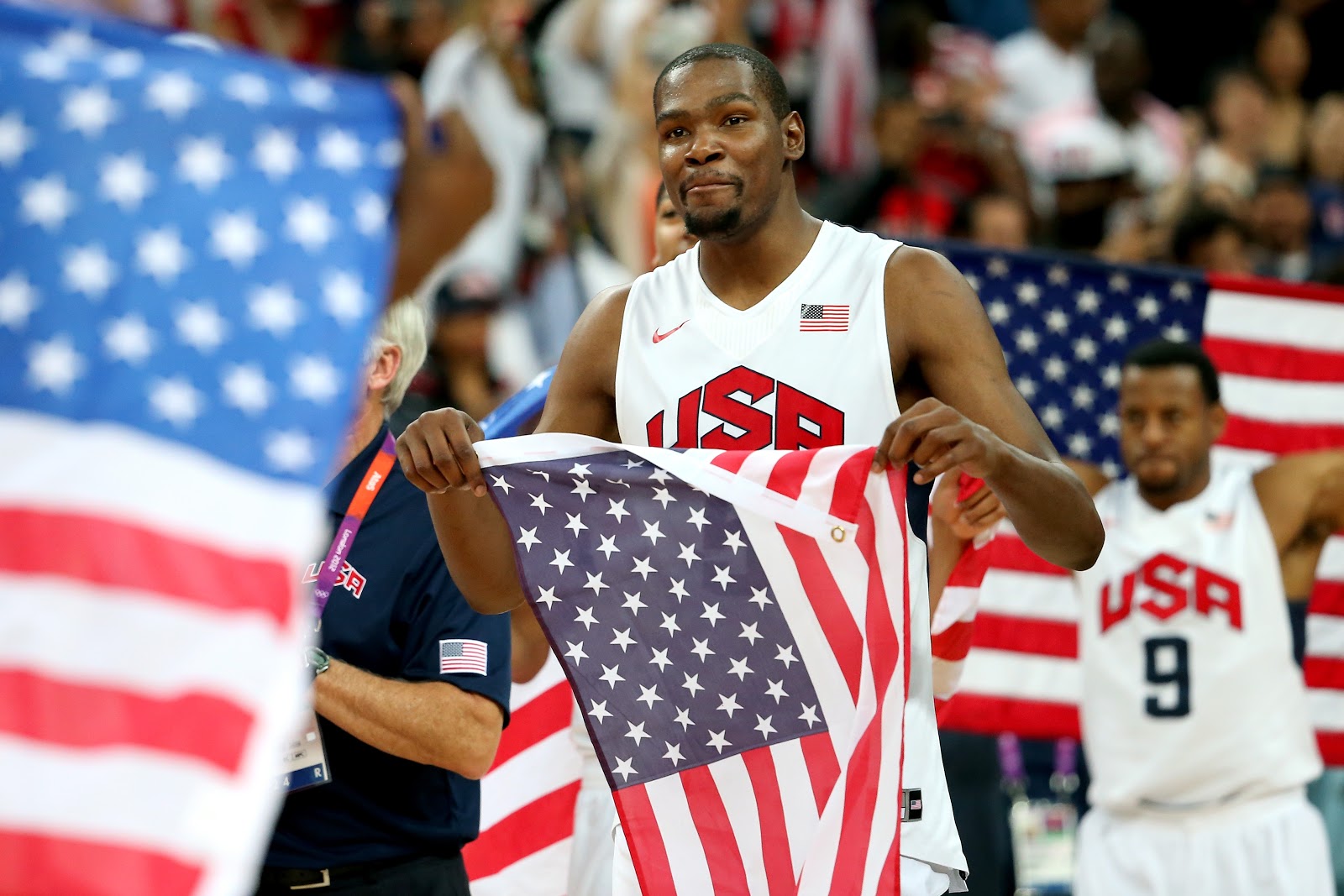

USA! USA! USA!
With that thought in mind on this Election Day 2012, I urge all American citizens old enough to have the right to vote to get far beyond the media filter, do your own research to make your own decision(s).  I can't stand it when people take misguided and inaccurate statements from ill-informed media or ignorant fellow citizens who parrot inaccuracies. No generalities. Just FACTs. No lame drame, Just FACTS.

One such claim that I read and hear far too often, sometimes from erroneous political ads is --  "Oh, Obama hasn't done enough.  Even former Private Equity Investor Mitt Romney made this statement (his exact words):  "Almost everything he did hurt the economy." (That sir, is a false statement, an out-right lie and a conscious effort to mislead the voters).

Well, here is a (partial) list of some of the things accomplished - with my Top 10 and then a more "complete" partial list...

1. Recovery Act to begin to pull the economy together.
2. Auto Industry support - saved millions of jobs and turned the tide that would have very likely resulted in an all-out Depression.
3. American Opportunity and Pell Grants to help students and families fund college education.
4. Signed 18 tax cuts to help small businesses.
5. Healthcare Reform, an accomplishment no other President was able to do in 100+ years.
6. Healthcare act also stopped Insurance Co's from discrimination against some policy holders; helped insure and keep policies for those with prior/existing conditions. (17 million kids benefitted)
7. Overhaul of many Federal Govt regulations to save time, money, establish policy.
8. Investment in clean energy solutions.
9. Massive Wall St and Banking reform - to benefit the consumer not the Banks. (Championed by Senate Candidate Elizabeth Warren too)
10. Tremendous record as Commander in Chief, especially to support the Vets, serviceman and their families while taking key steps to eliminate Al Queda regime to bring 9/11 terrorists to justice.

***

So ... Strong International Policy (Foreign relations) - as he "began" to build back the USA rep to the world after what was absolutely LOST from 2000-2008 ... Equal Pay (Ledbetter Act),  Consumer protection policy for the very people/corps who "broke" the economy and he fought for the Rights for Women (Reproductive healthcare issues; and so many, many more.... Please see:

  1. The first bill President Obama signed was the Lilly Ledbetter Fair Pay Act, to help women fight back when they don't get equal pay for equal work.
  2. His Recovery Act supported millions of jobs and helped to stave off a second Great Depression.
  3. He pushed for and won middle class tax cuts that benefited every American worker, and saved the typical family $3,600 in taxes over the last four years.
  4. President Obama rescued the auto industry, and now GM and Chrysler are healthier than they've ever been. The American auto industry has added nearly a quarter of a million jobs since June 2009—and they most likely wouldn't exist right now without President Obama's leadership.
  5. He doubled funding for Pell Grants, helping to make college more affordablefor nearly 10 million families.
  6. His student loan reform ended billions in subsidies to banks serving as middlemen and reinvested those savings directly in students.
  7. The President established the American Opportunity Tax Credit, worth up to $10,000 over four years of college.
  8. His Race to the Top Initiative helped spur nearly every state to raise academic standards.
  9. His tax cuts, social-welfare programs, and economic policies lifted nearly 7 million Americans above the federal poverty line in 2010.
  10. President Obama has signed 18 tax cuts for small businesses since taking office.
  11. We've seen 5.2 million new private sector jobs over the last 31 months.
  12. The unemployment rate is at the lowest level since President Obama took office.
  13. Health care reform—passed after decades of failed attempts by every previous president—provides affordable health coverage to every American and will lower premiums by an average of $2,000 per family by 2019.
  14. Obamacare expanded access to lifesaving preventive care such as cancer screenings and immunizations with no out-of-pocket costs for 54 million Americans.
  15. Obamacare ends insurance discrimination against the 129 million Americans with pre-existing conditions.
  16. Because of Obamacare, over 3 million more young adults have health insurance today than would if the new law hadn't passed.
  17. The parents of over 17 million children with pre-existing conditions no longer have to worry that their children will be denied coverage.
  18. President Obama has ordered the overhaul of federal government regulationsto make them smarter, practical, and more efficient. Just a fraction of these common-sense initiatives will help save businesses $10 billion in the next five years alone.
  19. His historic investments in clean energy have helped more than double the amount of electricity we obtain from wind and solar sources and helped increase biofuel production to its highest level in history.
  20. President Obama is doubling fuel efficiency standards, which will save drivers more than $8,000 at the gas pump, not to mention lessen the impact of automobiles on our environment.
  21. President Obama has taken unprecedented action to address climate change, reaching historic international agreements to curb carbon emissions, and taking action here at home to reduce carbon pollution from our vehicles and promote clean energy production.
  22. He has taken historic action to protect our environment—signing one of the largest expansions of protected wilderness in a generation and putting in place standards to reduce toxic air pollution that will save thousands of lives.
  23. President Obama fought for and won landmark Wall Street reform that reins in the abuses that led to the financial crisis and ends the era of taxpayer bailouts and "too big to fail."
  24. Wall Street reform created the Consumer Financial Protection Bureau, the nation's first federal agency focused solely on consumer financial protection—and the Bureau is already protecting families from unfair and abusive financial practices from Wall Street banks and shadowy corners of the financial industry.
  25. As part of President Obama's commitment to transparency, the White House has posted its visitor records online for the first time ever.
  26. President Obama's all-of-the-above approach to energy has helped cut the United States' dependence on foreign oil to its lowest level in 20 years.
  27. President Obama responsibly ended the war in Iraq.
  28. He announced a plan to end the war in Afghanistan and transition security responsibility to the Afghan people.
  29. President Obama sent the largest security assistance package to Israel in history and funded the Iron Dome system, which is protecting Israeli homes and schools from rocket attacks.
  30. President Obama rallied the international community to implement the toughest sanctions on Iran in history.
  31. Through the President's historic increases in Veterans Affairs funding, he has expanded and improved healthcare and job training access for our returningveterans.
  32. President Obama negotiated the New START Treaty with Russia to reduce the number of nuclear weapons in both countries. At the same time, he also secured commitments from dozens of other countries to lock down nuclear materials.
  33. His administration naturalized 11,146 military servicemembers as U.S. citizensin 2010; more than in any year since 1955.
  34. President Obama set a bold new plan for the future of NASA space exploration, using the skill and ability of the private sector for short trips to the International Space Station, while building a new vehicle for exploration of distant space, and doing everything in his power to support the economy on Florida's Space Coast.
  35. President Obama recognizes that tourism is one of America's largesteconomic engines; he's worked to encourage international visitors to come here, maintaining our security while keeping millions of Americans in good, paying jobs.
  36. He has affirmed his personal support of marriage equality, directed the Justice Department to stop defending DOMA in federal courts, and took the practical and compassionate step of extending hospital visitation rights to same-sex partners.
  37. He fought for and won the repeal of "Don't Ask, Don't Tell", allowing gay and lesbian members of the military to serve openly for the first time in history.
  38. When Congress failed to fix our broken immigration system, his administration did everything in its power to improve it, streamlining the legal immigration process and announcing a policy that lifts the shadow of deportation from hard working young immigrants brought to the U.S. as children.
  39. Oh, and he gave the order to send troops in after Osama Bin Laden—and has decimated al Qaeda's senior leadership.

Sunday, June 14, 2009

AP Runs Global NEWS Item on COVERT


Open the flood gates on Covert media coverage:

ORLANDO - (AP) --- REF READING: Bob Delaney isn't officiating in the NBA finals for the first time in nine years, sidelined by a late-season injury. The veteran referee got some news to cheer him up during his recovery. Delaney's book, ``Covert: My Years Infiltrating the Mob'' was recently released in paperback, and the motion picture rights to the book were optioned by Appledown Films and Scott-Burns Productions. Delaney has been an NBA referee for 22 years. His book tells the story of his years as a New Jersey state trooper working undercover to infiltrate organized crime.
---

Wednesday, July 2, 2008

WSJ on the AP ...


WSJ's Russell Adams wrote this think piece on the Associated Press on June 26th and I thought it was interesting. Click on the headline above to link to the WSJ (if you have an account):

NEW MEDIA FOCUS SPLITS AP MEMBERS:


As the economic pressure on newspapers intensifies, the Associated Press, a 162-year-old news gathering cooperative for the industry, is beginning to fracture.

Long a newspaper-centric organization, the AP has shifted its focus in recent years. With readers and advertisers migrating away from news on printed paper and toward cable TV and the Web, the AP is devoting more of its resources to producing content for other news outlets. These include the very Web portals that pose the greatest competition for newspapers, such as Yahoo and Google, which are now among the AP's biggest customers.

For some editors, the AP's strategy, coupled with its high prices, amounts to a betrayal at a time when the industry is under threat. In recent months such frustrations have sparked a bitter war of words. The editor of the Pittsburgh Post-Gazette, for example, likened AP President and Chief Executive Tom Curley to the secretary-general of the Politburo at a convention in April.

Some newspapers have attempted to reduce their reliance on the AP. This past spring, prompted by unhappiness with the AP's fees and reduced coverage of state and local news, the eight largest newspapers in Ohio created a cooperative called the Ohio News Organization, or OHNO, which allows its members to sidestep the AP by sharing stories. Five Montana newspapers owned by the newspaper concern Lee Enterprises Inc. have also begun sharing more content. And editors in Texas, Pennsylvania and Indiana have quietly inquired about how the Ohio cooperative works.

In some cases, newspaper editors are going up against their owners, many of whom are represented on AP's board and support the organization's initiatives. "There is a chill in the air that this is something that we can't engage our corporate owners on because they're conflicted," an editor says.

Dean Singleton, chairman of the AP's board and chief executive of newspaper publisher MediaNews Group, says that he welcomes a healthy debate about the AP's role in reporting and delivering the news but that the editors' complaints are misguided. "When you're faced with downsizing your news operations and making dramatic changes in how you operate, you always look for someone to blame," he says. "And AP has been a handy entity to complain about."

Rupert Murdoch, chief executive of News Corp., which owns Dow Jones & Co., publisher of The Wall Street Journal, was appointed to AP's board of directors in April. In March, Dow Jones announced it wouldn't renew the news partnership between Dow Jones Newswires and the AP and had entered into a new agreement with Agence France-Presse. Dow Jones said the switch reflected its strategy to invest in global financial news.

The AP was founded in 1846 by a group of New York newspapers seeking to chronicle the U.S.-Mexican War more efficiently. Its members pay annual fees and provide their own stories to other members alongside AP-produced content. For most of its life, the organization mainly served newspapers. But that began to change in the mid-1990s, when the AP began to pump money into photo- and video-journalism operations and package the products for sale to broadcasters.

More recently, as Web portals emerged as big paying customers, the AP deepened its coverage in areas like sports, entertainment and business. Today, U.S. broadcasters and Internet companies together account for more of the AP's revenue than U.S. newspapers do. While the AP's 1,500 member newspapers still own the organization -- other media outlets are associate members or have no membership stakes at all -- they account for only 27% of AP revenue, down from more than 50% in the mid-1980s. The new customers have also helped nearly triple the AP's revenue over the past two decades, from about $250 million in 1987 to more than $710 million last year.

The diversification of its customer base has allowed the AP to bolster its newsgathering resources in areas like international news and finance at a time when the newspaper industry is downsizing. Over the past four years, for example, the AP has added 64 editorial positions to provide in-depth coverage of large companies and financial markets.

But for many of the AP's newspaper members, this type of expansion is of little value. Most of the stories generated by the financial group wind up on sites like Yahoo Finance, MSN Money and CNNMoney.com.

Ohio is ground zero for the widening rift between the AP and its member newspapers. Ben Marrison, editor of the Columbus Dispatch, says a recent trial in Akron involving the theft of state money epitomizes members' frustrations. Before the trial Mr. Marrison placed a call to the AP Ohio bureau to find out if it would be sending a reporter.

In the past, Mr. Marrison says, he could usually count on the AP to cover such a trial if he wanted to commit more reporters to a bigger story. When he was told the AP wouldn't have a reporter there, he sent one of his own to Akron. Shortly after the story was posted on the Dispatch's Web site, an AP staffer rewrote it for a broader audience and put the new version on the state wire. "So it was important enough for them to move, but not important enough for them to cover," Mr. Marrison said. "What has happened is we've become the wire service for the wire service."

Many member newspapers say they support the AP's new-media initiatives and, particularly, its recent efforts to push members' content to mobile devices. The problem, some say, is the organization's perceived insensitivity to newspapers' financial hardship. The AP requires a seven-figure annual payment from most large newspapers, and it makes it very difficult to opt out of certain services. The New York Daily News has given notice that it will terminate its AP membership largely to protest a rule that requires two years' notice to drop AP services.

The AP recently announced price cuts it says will slash $21 million from newspaper members' fees starting next year, and it began unveiling estimated savings by paper this week. It expects the new plan to reduce fees for about 80% of members, leave costs unchanged for about 10% and raise them for about 10%. Whether that will mollify an already prickly group of editors is unclear.

"If they're our partners, they're going to help us find ways to reduce costs," says Robert Rivard, editor of the San Antonio Express-News. "If they're not our partners, they're just vendors."

Tuesday, May 13, 2008

Amen, brother ....

This story ran on the AP wire before Game 4 of the Cavs vs. Celtics series:

CLEVELAND (AP)—On the subject of the NBA’s infatuation with pregame pyrotechnics, smoke and noise, commissioner David Stern was loud and clear: He’s had enough.

“I think they’re ridiculous,” Stern said Monday before Game 4 of the Cavaliers-Celtics second-round playoff series. “I think that the noise, the fire, the smoke, is a kind of assault that we should seriously consider reviewing in whether it’s really necessary given the quality of our game.”

His comments came just a few minutes before Cleveland’s over-the-top player introductions, which include fire—hot enough that fans can feel the heat in the stands—shooting out of four swords on the scoreboard.

Such pyrotechnic displays have become common around the league. The barrage of fireworks in Boston is so intense it leaves a fog hanging over the court for most of the first quarter.

“It may be that these are the maniacal rantings of a fan from a different era and I recognize that, but you know I’m sitting there waiting for the next cannon to go off and then the fire heats up the arena,” Stern said, “so the temperature in the arena raises by 15 degrees. That’s if you can see it because you’re still waiting for the smoke, which is chemical, to clear.”

Cavs forward Ben Wallace says the smoke in Boston contributed to the dizziness that forced him to leave Game 2. Wallace didn’t go onto the court for Game 3 in Cleveland until the onslaught of smoke and fire had ended. Anderson Varejao ran onto the court in his place.

The special effects aren’t limited to pregame introductions. White residue from fire extinguishers delayed Game 1 of the Spurs-Hornets series for 19 minutes between the first and second quarters after a mascot soared through a ring of fire for a dunk in New Orleans.

Another thing that annoys Stern is the nonstop loud music and other noise that isn’t generated by fans.

“I always bite my tongue because I say, ‘Well, maybe I’m not the demographic that likes to be assaulted by loud rap, smoke, pyrotechnics and chemicals,”’ he said. “I’m outdated, but I think it’s time for us to say, ‘Hey guys, lets look at it one more time.”’

There’s rarely a quiet moment in Cleveland’s arena where the video screen routinely displays a meter registering over 100 decibels, as loud as a rock concert.

Stern, more of a Simon and Garfunkel fan, says he’s got nothing against hip hop and the music appreciated by younger audiences, but says the volume is over the top.

“What’s happened is that very well intentioned people feel that it’s their obligation to root their team on to victory, to urge them … they think if you turn up the loudspeaker it’s going to help them perform better even though there are babies in the building,” he said.

AP Sports Writer Tom Withers contributed to this report.


***

ESPN.com's Chris Sheridan wrote:

CLEVELAND -- David Stern's senses have been assaulted, and the commissioner feels it's time to turn down the noise and scale back the pyrotechnics at NBA games.

Stern went on a rant Monday night prior to Game 4 of the Celtics-Cavaliers series when asked if the trend toward loud, fiery in-arena entertainment gimmicks had gotten out of hand.

"I'm going to get in trouble for this, but I think they're ridiculous. I think the noise, the fire, the smoke is a kind of assault that we should seriously consider reviewing in whether it's really necessary given the quality of our game," Stern said.

Ben Wallace said the smoke from pregame fireworks in Boston prior to Game 2 worsened the dizzy condition that knocked him out of that game after just four minutes, and the Cavs decided to keep him in the locker room prior to Game 3 so he would not have a similar reaction during pregame introductions in Cleveland. The Cavs put on one of the league's most elaborate player-introduction rituals, with four huge jets shooting large streams of fire out of the corners of the center-court scoreboard.

"It may be that these are the maniacal rantings of a fan from a different era, and I recognize that, but you know I'm sitting there waiting for the next cannon to go off, and then the fire heats up the arena so the temperature in the arena rises by 15 degrees -- that's if you can see it because you're still waiting for the smoke, which is chemical, to clear, which is invariably done by the end of the half," Stern said.

"But I always bite my tongue because I'm not the demographic that wants to be assaulted by loud rap, smoke, pyrotechnics and chemicals. It makes me sort of outdated, but I think it's time for us to say, 'Hey guys, let's look at it one more time,'" he said.

Stern has had similar concerns in the past, and in 1996 the league strictly enforced a little-known rule on maximum in-arena decibel levels when the Utah Jazz were competing in the Western Conference finals against the Seattle SuperSonics.

"I think that's what has happened is that very well-intentioned people feel that it's their obligation to root their team on to victory, to urge them," he said. "But what they do is, they think if you turn up the loudspeaker it's going to help them perform better -- even though there are babies in the building.

"I think we should have it as a time capsule item, because in some future century people are going to look and say, 'What were they thinking about?'" he said. "And I'm positive that Red [Auerbach] is watching and getting ready to call me, because I think we've gone over the top."

Monday, September 10, 2007

The Three minute warning...

Organizers of the 2007 Rugby World cup and media outlets such as AP, AFP, Reuters reached agreement today and eased restrictions on video and news dissemination of world cup rugby video highlights, interviews and photography.

The photography is limited to a maximum of 200 images per game, according to the AP.

Viewpoint: The story is another example of sports leagues and entities framing their rights in regard to intellectual property and its use by news organizations. The leagues and tournament organizers are all in the business of selling right fees as well as managing their own web sites, whether they run their web site in house or license the right to maintain a site.

This deal was cut in Paris, France - the site of the world cup tournament.

Click on the title = Three minute warning - above for AP's take on the deal.